















UAE's Transport Authority Warns Against Overloading


Over the course of various articles, we have discussed the basics of tires that every car owner must know. For example, the recommended air pressure of your tyres, how to change a flat tire, or how to spot a worn-out tire. Similarly, PitStopArabia has repeatedly emphasized on knowing about the load capacity of the tyres.
Knowing how much load your truck, vehicle, or SUV can handle is significant for your safety and those of others. Likewise, it allows you to determine the amount you can fit in your vehicle and what number of things you can take along for the ride. Also, before calculating what to place in your car, do not forget the most essential thing: the weight of the passengers must be accounted for in the load capacity.
What is the Load Capacity?
For those of you who are unaware of what is the load capacity is, it is merely the maximum weight that each tire can carry. The load capacity can be easily calculated by looking at the tire's load index, written at the sidewall, or in the owner's manual. For more information about the load index, consider reading this article.
Why is it important?
In case you want to go on vacation or move to a new place with all your belongings, it is critical to know how much weight your tyres can convey. Why? As said before, tyres can carry specific loads, depending on their carrying capacity. If you overload a vehicle, the chances of a tire blowout increase drastically. Also, fuel consumption is negatively impacted, along with a reduction in the tire's durability. Therefore, it is significant that you know and do not exceed the load limit of your tyres.
Steps taken by the UAE’s Federal Transport Authority to Ensure Maximum Safety on the Roads
The FTA issued a guideline on how drivers can ensure maximum safety on the roads. These guidelines are meant to educate the drivers in terms of load capacity.
Holiday-goers have been encouraged not to over-burden their vehicles, especially overloading the rooftop of the vehicle. Also, they are advised to keep in mind the height of the load. Seeing gear and packs lashed on the top of the car is quite common, as drivers can be seen driving with excessive luggage. As an outcome of the UAE Ministry of Interior's late spring efforts, drivers have been cautioned not to stack their luggage over 60 cm in height.
These guidelines were issued in line with ensuring a maximum of 3 deaths per 100,000 inhabitants by 2021. This campaign is intended to last throughout the summer holidays. During this campaign, occupants were additionally encouraged to check their tyres, brake cushions, and motor cooling frameworks. To ensure that the guidelines are not flouted, fines have been introduced against overloading.
| Description | Fine amount | Black points |
|---|---|---|
Loading a light vehicle in a manner which is damaging to the roads. | Dh500 |
|
Loading a light vehicle in a manner which is harmful to others. | Dh500 | 4 |
Failure to follow loading/unloading regulations in designated areas. | Dh1,000 | 4 |
Loading a heavy vehicle in a manner which is damaging to the roads. | Dh2,000 | 6 |
Loading a heavy vehicle in a manner which is harmful to others. | Dh2,000 | 6 |
More on the Load Index of the vehicle
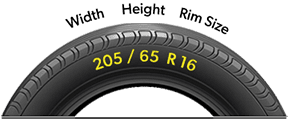
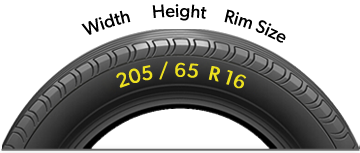
The Load Index (LI) is a numerical code which corresponds to the load (weight) a tyre can carry. Here is a typical example of an ISO Metric tyre code from which any individual can figure out the load index for his vehicle.
P 215/65 R15 95H M+S
Here is an interpretation of the tyre code:
P | intended use or vehicle class for the tyre (in this case, passenger vehicle) |
|---|---|
215 | Nominal section width in millimeter |
65 | Nominal aspect ratio |
R | Tyres Internal Construction |
15 | Rim diameter code |
95 | Load Index |
H | Speed Symbol, indicating max. Speed |
M+S | Mud + Snow |
In the above tyre code, 95 is the load index of the tyre, which corresponds to 690 KG. This means that the vehicle can never be loaded with more than 690 KG.
Keeping Your Tires Safe
Apart from keeping an eye on the load index, here are some tips that you can keep track to ensure that the tires are safe and properly maintained:
- Check tyre pressures once every month.
- All drivers must avoid driving at lower tyre pressures.
- Do not use tyres which are older than five years.
- Do not use tires with less than 1.6 mm tread depth.
- Buy tires from trusted sources.
- Use only the right tyre type and size for your vehicle.
- Rotate tyres regularly.
- Regularly check the condition, and air pressure of the spare tyre(s).
Final Thoughts
Once again, we advise car owners to know about the basics of the tyre. It will help ensure a safe driving experience for yourself and others. Although these things seem trivial, they play a critical role in preventing accidents. Therefore, keep an eye on your tires and keep checking the newsroom for other vital information. Thank You.