










How to Find Your Car Rim Size: 7 Easy Ways to Check


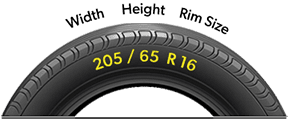
Not sure what rim size your car has? The easiest way to find your rim size is to read the tyre sidewall. For example, in 225/45R17, the number 17 tells you that the tyre is designed for a 17-inch rim.
You can also find your car's rim size from the driver's door sticker, markings on the wheel, owner's manual, VIN information, or by measuring the rim yourself.
Knowing the correct rim size is important when buying new tyres, changing wheels, or checking whether a different tyre size will fit your car.
Shop tyres online at PitStopArabia
7 Easy Ways to Find Your Car Rim Size
1. Read the Tyre Sidewall
The tyre sidewall is usually the quickest place to check your rim diameter.
Look for a code such as:
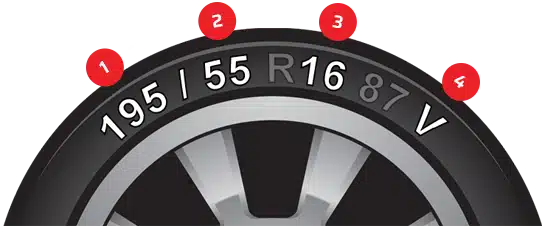
225/45R17
Here's what the numbers mean:
- 225 = tyre width in millimetres
- 45 = aspect ratio
- R = radial construction
- 17 = rim diameter in inches
So, a 225/45R17 tyre fits a 17-inch rim.
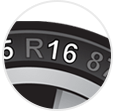
If you're asking, "Where can I find the rim size on a tyre?", look for the number immediately after the R.
Understand tyre numbers and codes
2. Check the Driver's Door Sticker
Open the driver's door and check the door jamb or pillar.
Most vehicles have a manufacturer's information sticker showing recommended tyre sizes and inflation pressures. Depending on the vehicle, it may also show approved wheel specifications.
This is particularly useful because the manufacturer's information is specific to your vehicle.
Tip: Don't confuse the recommended tyre size with the actual rim width of an aftermarket wheel.
3. Look for Numbers Stamped on the Wheel
Many alloy and steel wheels have their specifications cast, stamped or engraved on the wheel.
You may find markings such as:
17x7.5
or
7Jx17
The location varies, but check:
- Behind the wheel spokes
- Inner side of the rim
- Near the valve stem
- Around the wheel's inner barrel
If the tyre is still fitted, some markings may be difficult to see.
4. Measure the Rim Yourself
If you can't find any markings, you can measure the wheel.
For the most accurate measurement, the tyre should be removed because the rim diameter is measured at the bead-seat area, not simply from the outside edge of the wheel.
For rim width, measure between the appropriate inner bead-seat surfaces.
Avoid measuring only the outer lip because this can give you an incorrect result.
If you are unsure about measuring the wheel yourself, having a tyre professional check it is safer and more accurate.
Find the right tyre size for your car
5. Use Your VIN
Your vehicle identification number, or VIN, can help you identify the original wheel and tyre specifications for your car.
A VIN lookup may provide information such as:
- Factory-approved tyre sizes
- Wheel diameter
- Wheel width
- Bolt pattern
- Vehicle-specific fitment information
For an exact specification, use a reliable vehicle database or contact the manufacturer's dealership.
6. Check Your Owner's Manual
Your owner's manual normally includes a Tyres, Wheels or Specifications section.
It may list several approved combinations because some vehicles are available with different wheel sizes.
For example, the same car might be offered with:
- 17-inch wheels
- 18-inch wheels
- 19-inch wheels
Always check the specification for your particular model, engine and trim level.
7. Ask a Tyre Professional
If you're still unsure, don't guess.
A tyre specialist can check your current wheel and confirm:
- Rim diameter
- Rim width
- Tyre size
- Load rating
- Speed rating
- Wheel offset
- Suitable replacement options
This is especially useful if you're considering larger wheels or changing from the original factory specification.
How to Read a Rim Size Like 17x7.5
A marking such as 17x7.5 contains two important measurements.
- 17 is the wheel diameter in inches.
- 7.5 is the wheel width in inches.
You may also see markings containing letters and additional numbers.
What Does J Mean in Rim Size?
The J in a marking such as 7Jx17 refers to the rim's bead-seat/flange profile designation. It isn't the wheel's width.
What Does ET Mean on a Rim?
ET refers to wheel offset, which describes how the wheel's mounting surface sits in relation to its centreline.
Offset is important when changing wheels because an incorrect ET specification can cause clearance or rubbing problems.
Can You Find Rim Size Without Removing the Tyre?
Yes. In many cases, you don't need to remove the tyre.
The easiest options are:
- Read the tyre sidewall.
- Check the driver's door sticker.
- Look for markings on the wheel.
- Check the owner's manual.
- Use your VIN.
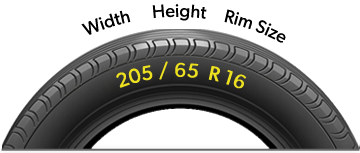
For example, if your tyre says 205/55R16, the 16 indicates a 16-inch rim diameter.
However, if you need to determine the actual rim width, checking the wheel marking or measuring the wheel is more reliable.
Does Rim Size Affect Car Performance?
Yes. Changing rim size can affect several aspects of driving.
Larger rims
Larger wheels can provide:
- Sharper steering response
- A sportier appearance
- Lower-profile tyre options
However, they can also result in a firmer ride and potentially higher tyre and wheel costs.
Smaller rims
Smaller wheels with higher-profile tyres can provide:
- Better ride comfort
- More sidewall cushioning
- Better protection against some road impacts
The correct choice depends on your vehicle and the manufacturer's approved specifications.
Quick Guide: How to Check Your Rim Size
Method |
What to Check |
Difficulty |
|
Tyre sidewall |
Number after R |
Easy |
|
Door sticker |
Approved tyre sizes |
Easy |
|
Wheel markings |
Diameter and width |
Easy–Medium |
|
Manual measurement |
Bead-seat dimensions |
Medium |
|
VIN lookup |
Factory specifications |
Easy |
|
Owner's manual |
Approved wheel sizes |
Easy |
|
Tyre professional |
Complete fitment |
Easy |
FAQ
What is the easiest way to find my car's rim size?
Check your tyre sidewall. In a size such as 225/45R17, the number 17 indicates the rim diameter in inches.
Where is the rim size written on a tyre?
Look at the tyre size code on the sidewall. The number after R indicates the wheel diameter, such as 17 in 225/45R17.
What does 17x7.5 mean on a rim?
17 means the rim is 17 inches in diameter, while 7.5 means it is 7.5 inches wide.
Can I check my rim size without removing the tyre?
Yes. Check the tyre sidewall, vehicle door sticker, wheel markings, owner's manual or VIN information.
What is J in rim size?
J is a rim flange/bead-seat profile designation, commonly seen in markings such as 7Jx17.
What is ET in rim size?
ET represents the wheel's offset, which determines how the wheel sits relative to its centreline and affects clearance.
Does rim size have to match tyre size?
Yes. The tyre's bead diameter must match the rim diameter, and the tyre width should be within the wheel manufacturer's approved range.