










How Does Rim Size Affect Car Performance, Comfort, and Handling?


Rim size affects your car’s handling, ride comfort, acceleration, fuel economy, braking, and tyre durability. Larger rims usually come with lower-profile tyres, which can improve steering response and cornering feel but often make the ride firmer and increase the risk of wheel and tyre damage. Smaller rims generally provide more sidewall, giving better comfort and protection on rough roads.
For UAE drivers, the best rim size depends on how you drive, your vehicle manufacturer’s specifications, and the balance you want between comfort, performance, appearance, and cost.
Buy car tyres online at PitStopArabia and get the right tyres delivered and fitted across the UAE
Do Bigger Rims Improve Handling?
They can improve steering response, especially when paired with appropriately sized low-profile tyres.
A shorter tyre sidewall generally flexes less when you turn the steering wheel. This can make the car feel more responsive and stable during cornering.
Potential advantages include:
- Sharper steering response
- More precise turn-in
- Less sidewall movement during cornering
- A more connected steering feel
However, bigger rims don't automatically mean better handling. A heavier wheel and tyre combination can increase unsprung and rotational mass, which may reduce some of the performance benefits.
How Does Rim Size Affect Ride Comfort?
This is one of the biggest differences you'll notice.
A tyre's sidewall acts as part of the suspension system by absorbing some of the impact from bumps, potholes, road joints, and uneven surfaces.
With a smaller rim, there is usually more sidewall available.
- Smaller rim + taller tyre sidewall = generally more cushioning.
- Larger rim + shorter tyre sidewall = generally firmer ride.
This means a 17-inch setup may feel more comfortable over uneven roads than a 20-inch setup on the same vehicle, assuming the overall tyre diameter and other specifications are appropriately matched.
For UAE driving, this can matter when moving between smooth highways and urban roads where road imperfections, kerbs, or construction areas may be encountered.
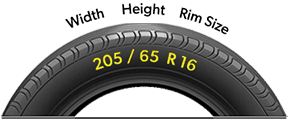
Not sure which tyre size you need? Check our tyre size chart to find the right size for your car before buying new tyres
Do Bigger Rims Affect Fuel Economy?
Yes, potentially.
Larger wheels aren't necessarily heavier, but many larger wheel-and-tyre combinations weigh more than smaller alternatives.
Additional rotational and unsprung weight can make the vehicle work harder, particularly during acceleration. Tyre construction and width can also affect rolling resistance.
Therefore, moving to a significantly larger and heavier setup may contribute to:
- Slightly higher fuel consumption
- Slower acceleration
- Increased braking workload
- More suspension load
The actual effect varies considerably between vehicles and wheel designs, so it's better to compare the complete wheel-and-tyre weight, rather than assuming every larger wheel will use more fuel.
Want to improve your car’s fuel economy? Learn how wheel size affects fuel consumption in the UAE and choose the right wheels and tyres for your car
Does Rim Size Affect Acceleration?
It can.
The engine has to accelerate the wheels and tyres every time the vehicle moves. Heavier wheels increase rotational mass, which can make acceleration feel less responsive.
This is why a lightweight 18-inch wheel can sometimes provide better performance than a heavy 17-inch wheel, despite being larger.
So when upgrading wheels, don't look at diameter alone. Consider:
- Wheel weight
- Tyre weight
- Tyre width
- Overall diameter
- Vehicle power
- Intended driving conditions
Do Bigger Rims Improve Braking?
They can, but the relationship isn't automatic.
Larger wheels may provide additional space for larger brake components, which can be useful on performance vehicles. A suitable wider tyre may also provide a larger contact patch.
However, braking performance depends on much more than rim diameter, including:
- Brake discs and calipers
- Brake pads
- Tyre compound
- Tyre condition
- Vehicle weight
- Road surface
- ABS calibration
Simply installing a larger rim does not guarantee shorter stopping distances.
Check your tyre size and tyre codes before you buy tyres online at PitStopArabia.
Are Bigger Rims More Likely to Get Damaged?
Generally, yes, when they are paired with low-profile tyres.
A low-profile tyre has less sidewall available to absorb an impact. Hitting a pothole, kerb, or road debris can therefore transfer more force to the wheel.
Potential problems include:
- Bent alloy wheels
- Tyre sidewall damage
- Sidewall bulges
- Cracked wheels in severe impacts
- Reduced ride comfort
This is particularly important when choosing wheels for daily driving.
How Does Rim Size Affect Tyre Cost?
Larger rims often require larger or lower-profile tyres, which can be more expensive.
A larger wheel setup may increase your overall ownership costs because:
- Replacement tyres can cost more
- Premium low-profile tyres may have higher prices
- Wheel damage can be more expensive to repair or replace
- Some performance tyres may have shorter service lives depending on driving conditions
If your priority is economical daily driving, the largest available rim isn't necessarily the best choice.
What Rim Size Is Best for UAE Roads?
There isn't one universal "best" rim size for every UAE driver.
Choose smaller or moderate-size rims if you prioritise:
- Ride comfort
- Better pothole protection
- Lower replacement costs
- Everyday city driving
- A more forgiving ride
Choose larger rims if you prioritise:
- Sportier appearance
- Sharper steering response
- Lower-profile tyre styling
- More aggressive vehicle appearance
- Performance-oriented driving
For many daily-driven cars, a moderate increase from the factory wheel size can provide a reasonable balance between appearance, handling, and comfort.
Does Changing Rim Size Affect the Speedometer?
It can if the overall tyre diameter changes significantly.
Your speedometer and several vehicle systems are designed around the vehicle's original tyre circumference.
If you install a larger rim but choose a tyre with a sufficiently shorter sidewall, you can keep the overall tyre diameter close to the original.
For example, changing from a smaller rim to a larger rim does not necessarily mean the entire tyre becomes larger. The wheel gets bigger while the tyre sidewall becomes shorter.
Always compare the complete tyre size rather than looking at rim diameter alone.
What About ABS and Traction Control?
Changing the overall rolling diameter significantly can affect systems that use wheel-speed information, including ABS and traction control.
That's why wheel upgrades should stay within the manufacturer's approved fitment range whenever possible.
If you're unsure about a new wheel and tyre combination, check your vehicle manual or have the fitment verified by a qualified tyre professional.
Rim Size Comparison: Comfort vs Performance
Rim Size |
Typical Tyre Profile |
Comfort |
Handling Feel |
Damage Risk |
|
16-inch |
Taller |
High |
Balanced |
Lower |
|
17-inch |
Medium |
Good |
Balanced |
Moderate |
|
18-inch |
Lower |
Moderate |
Responsive |
Moderate |
|
19-inch |
Low |
Firmer |
Sportier |
Higher |
|
20-inch+ |
Very low |
Firm |
Sharp |
Higher |
Actual results depend on the vehicle, tyre size, wheel weight, tyre construction, and suspension setup.
FAQ
1. Do bigger rims make a car faster?
Not necessarily. Larger rims can improve steering response, but heavier wheels may increase rotational mass and negatively affect acceleration.
2. Do bigger rims reduce ride comfort?
Usually. Larger rims are commonly paired with lower-profile tyres, leaving less sidewall to absorb road impacts.
3. Are smaller rims better for potholes?
Generally, yes. A taller tyre sidewall provides more cushioning and protection against impacts than a low-profile tyre.
4. Do bigger rims use more fuel?
They can if the larger wheel-and-tyre combination is heavier or has greater rolling resistance. The actual effect varies by vehicle and tyre.
5. What is the best rim size for daily driving in the UAE?
A factory-approved or moderately upgraded wheel size is often the best compromise between comfort, handling, appearance, and running costs.