










Rim Size vs Tyre Size: How to Know What Fits Your Car


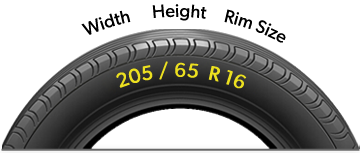
Your tyre and wheel rim must have the same rim diameter. For example, a tyre marked 205/55R16 is designed for a 16-inch rim, while a 205/55R17 tyre requires a 17-inch rim. Tyre width must also be compatible with the rim width, and the complete tyre size should match your vehicle manufacturer's recommended fitment.
Before buying, check the tyre placard on the driver's door jamb, owner's manual, or manufacturer's recommended fitment information. These sources can confirm the correct tyre size, load index, speed rating, and recommended tyre pressure for your car.
Not sure which tyre size you need? Check our tyre size chart to find the right size for your car before buying new tyres
Key Takeaways
- The number after R shows the required rim diameter.
- A 16-inch tyre fits a 16-inch rim, not a 17-inch or 15-inch rim.
- Tyre width must be compatible with the rim's width.
- The correct tyre size depends on your car's make, model, year and trim.
- Changing tyre or wheel size can affect handling, ride comfort, clearance and speedometer accuracy.
- Always check the vehicle manufacturer's recommended sizes before changing your tyre or rim size
Want to make sure you choose the correct tyre size? Check our guide onBest Practices for Finding the Right Tyre Size for Your Car for practical tips on finding the right fit.
What Is the Difference Between Rim Size and Tyre Size?
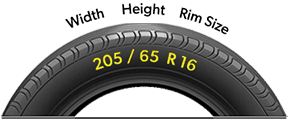
Rim size normally refers to the wheel's diameter, measured in inches. Tyre size is a complete measurement that includes the tyre's width, aspect ratio, construction, and rim diameter.
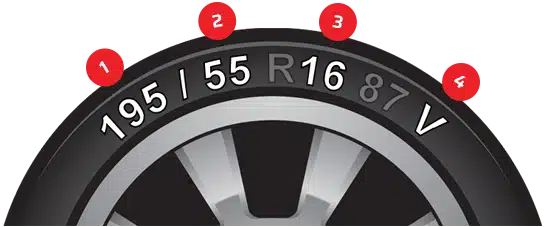
For example, in 205/55R16:
- 205 = tyre width in millimetres
- 55 = aspect ratio, meaning the sidewall height is 55% of the tyre width
- R = radial construction
- 16 = rim diameter in inches
Therefore, a 205/55R16 tyre needs a 16-inch rim.
Can a 16-Inch Tyre Fit a 17-Inch Rim?
No. A tyre designed for a 16-inch rim cannot be safely mounted on a 17-inch rim.
The rim diameter must match the tyre's specified rim diameter exactly. This is one of the most important rules of tyre fitment.
For example:
Tyre Size |
Required Rim Diameter |
|
205/55R15 |
15 inches |
|
205/55R16 |
16 inches |
|
225/45R17 |
17 inches |
|
235/40R18 |
18 inches |
The tyre width and aspect ratio can sometimes be changed as part of an approved fitment, but the rim diameter must always correspond to the tyre.
Not sure what the numbers and letters on your tyre mean? Learn how to read every tyre marking in our guide toWhat Do the Codes on Tyres Represent.
How Do You Read a Tyre Size?
Understanding the numbers on your tyre sidewall makes it easier to identify the correct tyre for your car.
Take 225/45R17 as an example:
Part |
What It Means |
Example |
|
225 |
Tyre width |
225 mm |
|
45 |
Aspect ratio |
Sidewall is 45% of tyre width |
|
R |
Construction |
Radial |
|
17 |
Rim diameter |
17-inch rim |
So, 225/45R17 means a 225 mm-wide radial tyre with a 45% aspect ratio designed for a 17-inch rim.
Does Tyre Width Need to Match Rim Width?
Yes. Although rim diameter must match exactly, tyre width has an approved compatibility range for different rim widths.
A tyre that is too narrow or too wide for a particular rim can affect the tyre's shape, handling, steering response and wear.
For example, a 225-width tyre may be approved for several rim widths depending on the specific tyre model and manufacturer. Therefore, do not rely on a generic chart alone when selecting a tyre.
Always check the tyre manufacturer's approved rim-width range for the exact tyre model.
How Do I Know What Tyre Size Fits My Car?
The safest way to identify the correct tyre size is to check your vehicle's original equipment specifications.
1. Check the Driver's Door Placard
Open the driver's door and check the door jamb, door pillar or nearby area.
The tyre information placard may show:
- Recommended tyre size
- Front and rear tyre sizes
- Load index
- Speed rating
- Recommended tyre pressure
This is usually one of the most reliable places to check your vehicle's original tyre specification.
2. Check the Owner's Manual
Your owner's manual normally lists the approved tyre sizes and inflation pressures for your vehicle.
Some vehicles have different recommended sizes depending on the trim, engine, wheel package or front/rear axle.
3. Check Your Current Tyre
Look at the sidewall of your existing tyre.
For example, if it says 235/55R18, the tyre is designed for an 18-inch rim.
However, do not automatically assume the current tyre is the correct size. A previous owner may have installed a non-standard size.
4. Check the Manufacturer's Fitment Information
For the most accurate result, verify the tyre size using your vehicle's:
Make + Model + Year + Trim
This is especially important if you are considering changing from the original wheel or tyre size.
What Happens If You Change Your Tyre or Rim Size?
Changing wheel or tyre size can affect several aspects of your vehicle.
Change |
Possible Effect |
|
Larger overall tyre diameter |
Can affect speedometer readings and vehicle clearance |
|
Smaller overall tyre diameter |
Can affect speedometer readings and gearing |
|
Wider tyre |
May create clearance or rubbing issues |
|
Different wheel offset |
Can change clearance, steering feel and wheel loading |
|
Larger wheel with lower-profile tyre |
May reduce sidewall cushioning and ride comfort |
|
Heavier wheel and tyre |
Can affect acceleration, braking and suspension response |
A size change should therefore be based on an approved fitment, not appearance alone.
Plus Sizing: Can You Put Larger Rims on Your Car?
Yes, some vehicles can use larger wheels with a corresponding lower-profile tyre. This is commonly known as plus sizing.
For example, a vehicle originally equipped with a 16-inch wheel may have an approved 17-inch or 18-inch setup.
However, increasing rim diameter does not simply mean buying a larger rim. The replacement tyre must maintain an appropriate overall diameter and meet the vehicle's load and speed requirements.
Before changing size, check:
- Overall tyre diameter
- Tyre width
- Rim width
- Wheel offset
- Load index
- Speed rating
- Suspension and fender clearance
- Vehicle manufacturer's approved fitments
How Can You Check Tyre and Rim Compatibility?
Use this simple process:
Step 1: Find your vehicle's recommended tyre size.
Step 2: Read the complete tyre size on the sidewall.
Step 3: Make sure the tyre's rim diameter matches the wheel diameter.
Step 4: Check that the tyre width is approved for the rim width.
Step 5: Confirm the load index and speed rating.
Step 6: If changing the original size, verify the replacement combination against the vehicle manufacturer's approved fitment.
Step 7: Have the tyres installed and balanced by a qualified tyre professional.
FAQ
Can a 17-inch tyre fit a 16-inch rim?
No. The tyre's rim diameter must match the rim diameter. A tyre marked 17 inches requires a 17-inch rim.
Does tyre width have to match rim width?
Not exactly. A tyre can normally fit within an approved range of rim widths, but the exact range depends on the tyre manufacturer and model.
Is rim size the same as tyre size?
No. Rim size refers primarily to the wheel diameter, while tyre size includes width, aspect ratio, construction and rim diameter.
Where can I find my car's correct tyre size?
Check the driver's door placard, owner's manual and manufacturer-approved fitment information. You can also check the current tyre sidewall, but verify that the existing tyre is the correct specification.
Can I use a wider tyre on the same rim?
Sometimes. A wider tyre may be compatible with the same rim, but only if the tyre manufacturer's approved rim-width range and the vehicle's clearance and fitment requirements allow it.
What happens if I use the wrong tyre size?
An incorrect tyre size can affect handling, ride comfort, clearance, speedometer accuracy, tyre wear and overall vehicle performance. Inappropriate fitment can also create safety risks.
Should all four tyres be the same size?
For most standard vehicles, all four tyres are the same size unless the manufacturer specifies a staggered fitment with different front and rear sizes. Always follow the vehicle manufacturer's specification.