










How to Measure Wheel Size: A Simple Guide for Car Owners


To measure your car wheel size, check five key specifications: diameter, width, bolt pattern (PCD), offset (ET), and centre bore. The easiest option is to read the markings stamped inside the wheel. If they're unavailable, you can measure the wheel manually with a tape measure, straight edge, and caliper.
Knowing these measurements helps you choose compatible tyres and wheels while avoiding rubbing, vibration, uneven tyre wear, and fitment problems.
Use PitStopArabia’s Tyre Size Calculator to find your exact tyre size and choose the right tyres for your car
What Wheel Measurements Do You Need?
A wheel's size is more than just its diameter. Before buying a replacement or upgrading your wheels, check:
Measurement |
What It Means |
Example |
|
Diameter |
Wheel diameter |
17 inches |
|
Width |
Distance between bead seats |
7.5 inches |
|
PCD |
Bolt pattern |
5x112 |
|
ET / Offset |
Wheel position relative to the hub |
ET45 |
|
Centre Bore |
Diameter of the centre hole |
66.6 mm |
For example, a marking such as 17x7.5J ET45 5x112 provides several important wheel-fitment details.
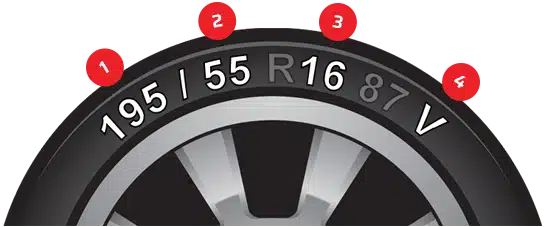
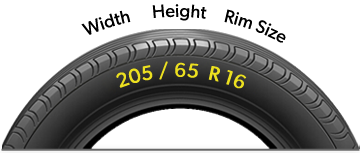
What Do the Codes on Tyres Represent
1. How to Measure Wheel Diameter
Check the Tyre Sidewall First
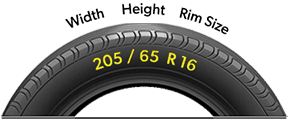
If a tyre is already fitted, the quickest way to identify the wheel diameter is to read the tyre size.
For example:
225/45R17
The 17 after the letter R means the tyre is designed for a 17-inch wheel.
However, this only tells you the wheel diameter. It doesn't tell you the wheel's width, offset, PCD, or centre bore.
Measure the Wheel Directly
If the tyre has been removed:
- Place the wheel on a flat surface.
- Measure from one inner bead seat to the opposite inner bead seat through the centre.
- Do not measure across the outside edges of the wheel lip.
- Record the measurement in inches.
The nominal wheel diameter is measured at the bead-seat area, not across the complete outside diameter.
2. How to Measure Wheel Width
Wheel width determines which tyre widths can safely be mounted.
Check the Wheel Marking
Look inside the wheel for a marking such as:
17x7.5J
Here:
- 17 = wheel diameter
- 7.5 = wheel width
- J = flange profile
Measure It Yourself
With the tyre removed:
- Place the wheel face down.
- Measure between the inner bead seats on opposite sides.
- Record the width in inches.
- Don't measure from the outside edges of the rim lips.
For example, a measurement corresponding to 7.5 inches indicates a 7.5-inch-wide wheel.
3. How to Measure Bolt Pattern (PCD)
PCD, or Pitch Circle Diameter, tells you the number of bolt holes and the diameter of the circle passing through their centres.
For example:
5x112
means:
- 5 = five bolt holes
- 112 = 112 mm bolt-circle diameter
Measuring 4- or 6-Lug Wheels
For wheels with an even number of bolt holes, measure from the centre of one hole to the centre of the directly opposite hole.
Measuring 5-Lug Wheels
Five-lug wheels require a different measurement because there is no directly opposite hole.
Measure from the centre of one bolt hole to the appropriate reference point on the hole two positions away. For accurate fitment, it's best to verify the result against the wheel manufacturer's specification rather than relying solely on a manual measurement.
Common PCDs include:
- 4x100
- 5x112
- 5x114.3
- 6x139.7
The PCD must match your vehicle's hub specification. A wheel with the wrong bolt pattern should not be forced onto the vehicle.
4. How to Measure Wheel Offset (ET)
ET is the wheel's offset. It describes the position of the wheel's mounting surface relative to its centre line.
You may see markings such as:
- ET35
- ET45
- ET50
- ET-20
The Easiest Way
Look at the inside of the wheel for an ET marking. This is more reliable than manually calculating offset when the original marking is available.
What Different ET Values Mean
- Higher positive ET: wheel generally sits further inward.
- Lower positive ET: wheel generally sits further outward.
- ET0: mounting surface is at the wheel's centre line.
- Negative ET: wheel sits further outward.
Changing ET can affect tyre clearance, steering behaviour, suspension clearance, and the vehicle's stance.
5. How to Measure Centre Bore
The centre bore is the diameter of the hole in the middle of the wheel.
You can measure it using:
- A digital caliper for greater accuracy
- A suitable measuring tool across the centre hole
For example, CB66.6 means the centre bore is approximately 66.6 mm.
The wheel's centre bore needs to be compatible with the vehicle's hub. If an aftermarket wheel has a larger centre bore, the correct hub-centric rings may be required to centre the wheel properly.
If the centre bore is smaller than the vehicle's hub, the wheel will not fit over the hub.
Find the Right Tyre Load Rating for Your Bigger Rims
Wheel Size Measurement Cheat Sheet
Measurement |
How to Check |
Example |
|
Diameter |
Tyre sidewall or inner bead-seat measurement |
17 inches |
|
Width |
Wheel marking or bead-seat measurement |
7.5 inches |
|
PCD |
Measure bolt-hole pattern or check specification |
5x112 |
|
ET / Offset |
Read wheel marking |
ET45 |
|
Centre Bore |
Measure centre hole |
66.6 mm |
Can You Measure Wheel Size With the Tyre Still On?
You can identify the wheel diameter from the tyre sidewall, but accurate measurements of wheel width, offset, and centre bore generally require access to the wheel itself.
For example, if your tyre says 245/45R18, the 18 confirms that the tyre is designed for an 18-inch wheel.
For complete wheel fitment, check the wheel markings or consult the vehicle manufacturer's specifications.
Why Correct Wheel Measurements Matter
Getting wheel measurements wrong can cause:
- Tyre rubbing against suspension or fenders
- Wheel vibration
- Uneven tyre wear
- Changes in steering feel
- Insufficient brake clearance
- Poor wheel fitment
This is particularly important when upgrading wheels on SUVs, 4x4s, and performance cars.
For UAE drivers, don't choose a wheel based only on appearance or diameter. Check the complete fitment specification and make sure the wheel and tyre combination is suitable for your vehicle.
FAQ
1. How do I measure my car's wheel size?
Check the wheel's markings for its diameter, width, ET, and PCD. If the markings aren't available, measure the wheel manually using the appropriate measurement points.
2. How do I know what diameter my wheel is?
Read the tyre sidewall. In 225/45R17, the number 17 indicates a 17-inch wheel. You can also measure the wheel's inner bead-seat diameter with the tyre removed.
3. How do I measure wheel width?
With the tyre removed, measure between the inner bead seats of the wheel. Don't measure the outside edges of the rim lips.
4. What does 5x112 mean on a wheel?
5x112 means the wheel has five bolt holes arranged on a 112 mm bolt circle.
5. How do I find my wheel's ET?
Look for a marking such as ET45 on the inside of the wheel. ET represents the wheel's offset in millimetres.
6. How do I measure centre bore?
Measure the diameter of the wheel's centre hole using a digital caliper or another accurate measuring tool.
7. Can I use any tyre on my wheel?
No. The tyre must be compatible with the wheel's diameter and width, as well as your vehicle's approved fitment, load rating, speed rating, and clearance requirements.